AgiBot G2 Humanoid Robots Achieve Inaugural Deployment on Longcheer Production Line
G2s deployed to ferry finished products to testing stations mark company’s first deployment of embodied intelligence AI robots.
Published May 16, 2026
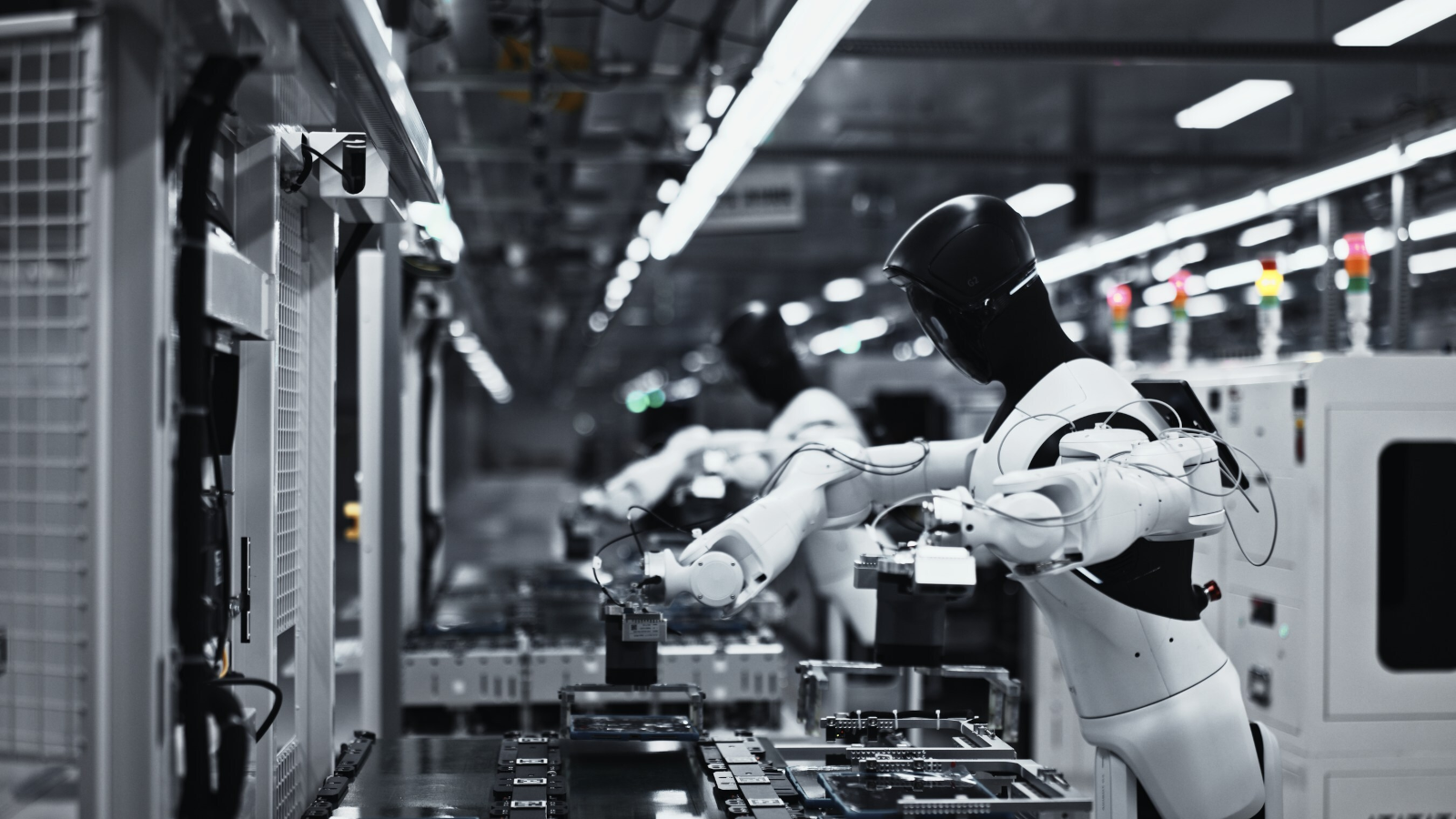
After extensive testing, AgiBot’s G2 model humanoid robots have achieved one of the first commercial deployments of an embodied intelligence robot.
AgiBot’s new G2 model humanoid robots are getting their first commercial deployment at a Longcheer Technology facility that manufactures tablets. The G2s will be working directly on the production lines in the same environment as human operators. This will be their first deployment out in the wild, and AgiBot is heralding the purchase as a large step forward in proving the feasibility of embodied intelligence applications.
"2026 marks the beginning of large-scale deployment for embodied intelligence," Dr. Yao Maoqing, partner, senior vice president and president of Embodied Business Unit at AgiBot, said. "This project demonstrates that embodied AI is no longer experimental. It is a practical, production-ready capability that can operate reliably under real industrial conditions and deliver measurable economic value."
"This deployment represents more than a technical milestone, it marks the first real-world validation of embodied AI in consumer electronics precision manufacturing," Li Long, general manager of Longcheer's Robotics Division, said. "Working closely with AGIBOT, we accelerated the path from innovation to production. In just four months, the AGIBOT G2 was integrated into Longcheer's mass production line, delivering stable, continuous operation and meeting all key targets. This milestone highlights a scalable path forward for embodied AI in manufacturing."
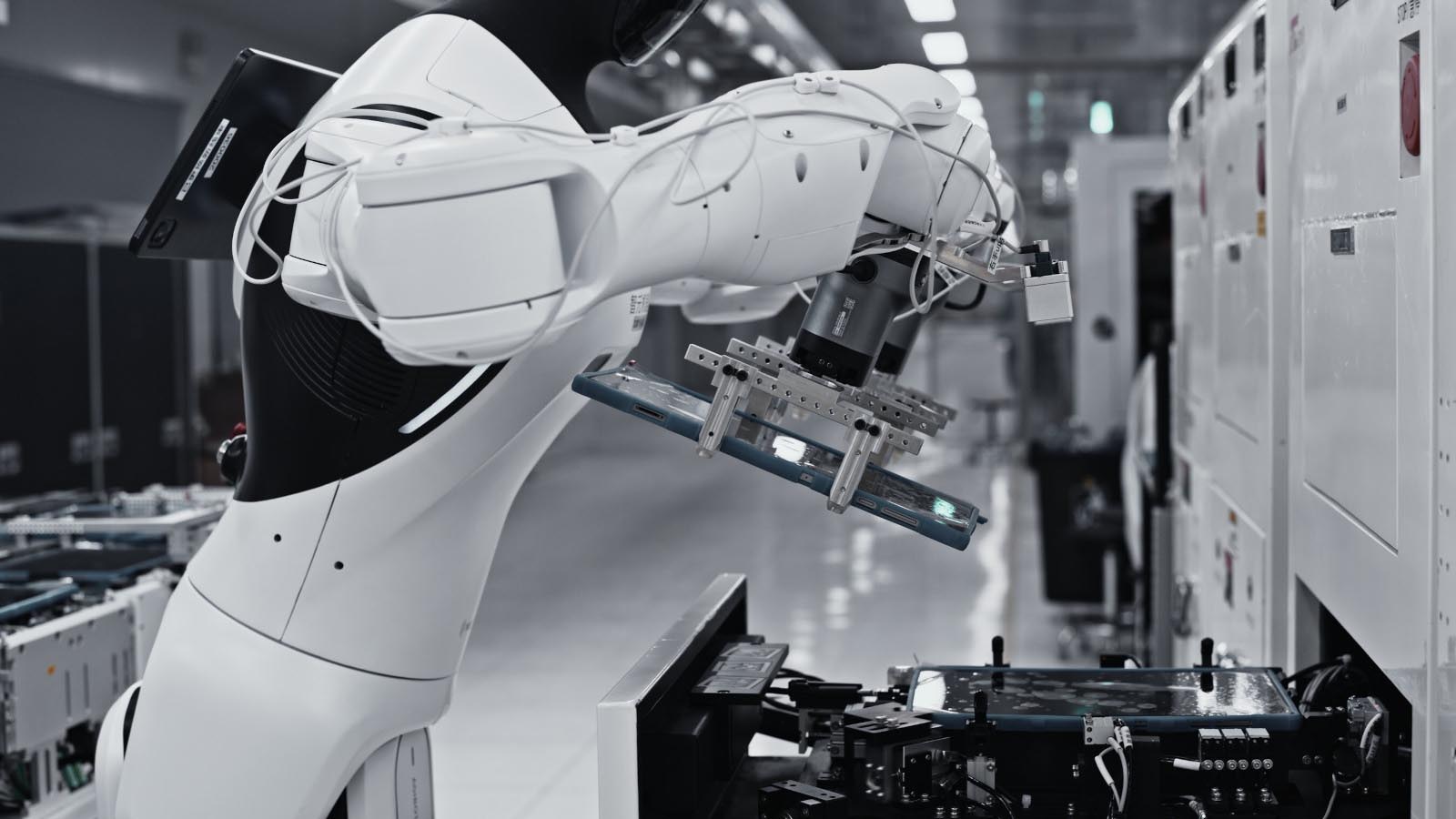
Longcheer has deployed the G2s in the testing section of their manufacturing line, where they will be receiving assembled tablets, placing them in a testing fixture, then sorting finished and defective models based on the fixture’s analysis. Along the way, they’ll have to navigate the factory’s layout, and insert their charges with millimeter-level accuracy.
AgiBot reported some key metrics that have already arisen from the G2s’ inaugural deployment. In their current position, they have achieved a throughput of up to 310 units per hour, process roughly 3,000 tablets per “shift,” and have a near perfect success rate.
They also reported a deployment time of 36 hours to fully integrate the G2s on the manufacturing line. According to AgiBot, that swift deployment time is thanks to a combination of simulation-based validation, RL, and on-device intelligence that reduce the need for manual adjustments.
AgiBot has positioned the G2s as a bold answer to the rise of highly variable small-batch production flows, which have become increasingly popular in the manufacturing industry. The pitch is that by leaning on AI-driven learning and decision making, AgiBot can develop a flexible solution that can learn and incorporate multiple product workflows to keep up with that variability. By putting that package on a mobile, wheeled robot, the G2 is being designed to tackle whatever challenges or production needs the future might throw at the industry.
With G2s already hard at work, AgiBot announced plans to expand deployment to 100 robots by Q3 2026, and that they were eyeing multiple industries, including automotive, semiconductors and energy, to expand to.