Laser Marking Systems, Image Readers and Modex: Datalogic’s Busy Month
Datalogic is showcasing several new advances at Modex, including one that already has a notable success story in the parcel industry.
Published April 9, 2026

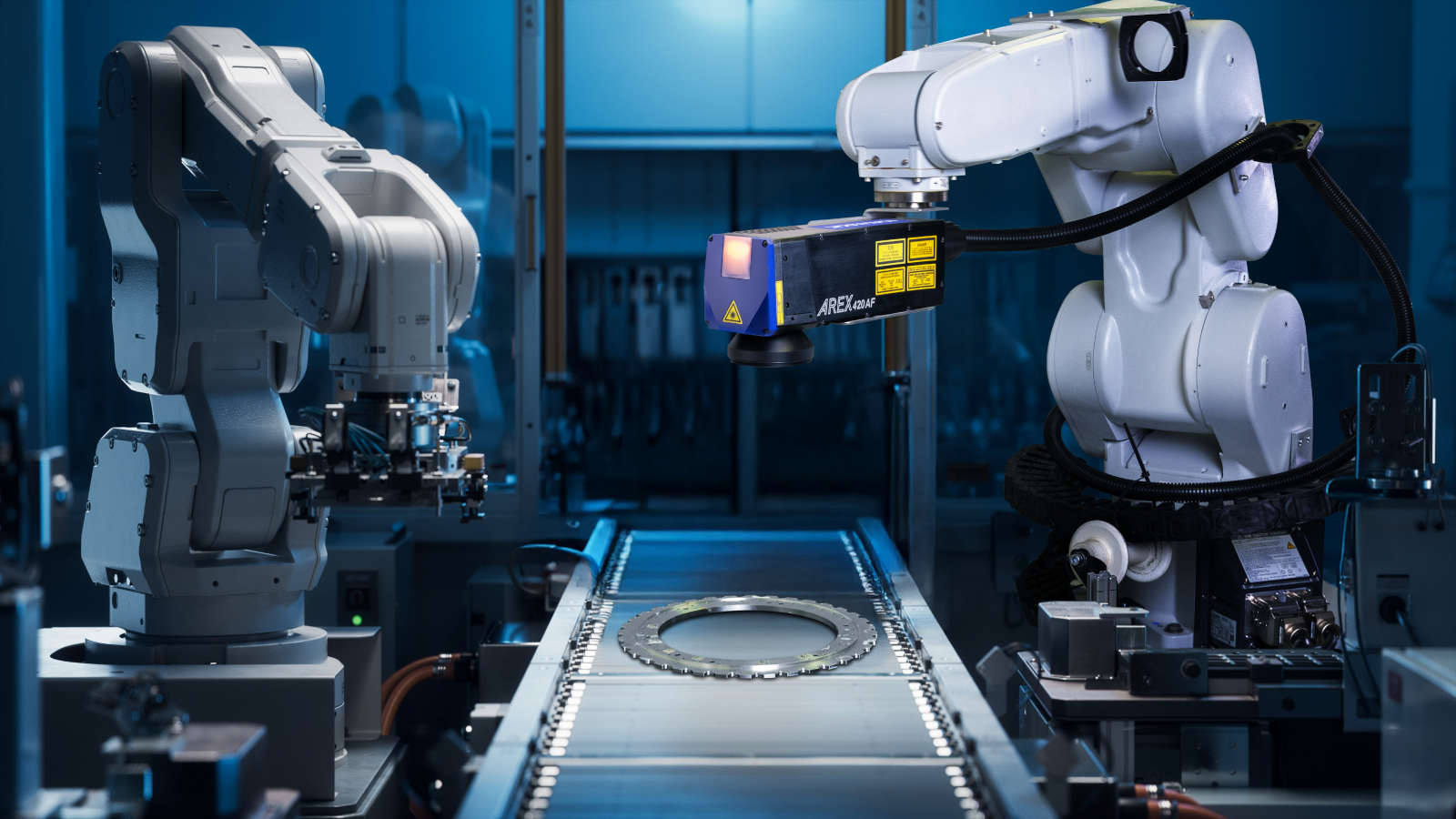
Headlining Datalogic’s busy month of announcements is the AREX400 AF, a new fiber laser marking system.
Datalogic has been keeping themselves busy in the leadup to Modex, releasing a flurry of announcements and previews from multiple departments showcasing new and upcoming detection technology that the company has developed.
From laser marking systems to 2D imagers, Datalogic is working to push the boundaries of what their sensor technology can do on multiple fronts. Modex is looking to be a broad celebration of those efforts, with multiple new releases seeing the light of day for the first time at the show.
AREX400 AF Released
Chief among their recent announcements, Datalogic launched the AREX400 AF, a new fiber laser marking system designed to eliminate one of the most common constraints in laser marking: manual refocus when marking parts with different heights.
Building on the existing technology of the AREX400 family, the AREX400 AF features software-controlled Adjustable Focus technology, enabling instant focus adjustment directly within the marking software. With a working range from ±20 mm up to ±60 mm, the AREX400 AF is built to remove the need for manual intervention when dealing with height variations.
Traditional fixed focus laser markers require manual adjustment when switching between parts with different heights. The AREX400 AF eliminates this constraint.
Focus can be adjusted instantly through the associated Lighter 9 software, allowing operators to adapt to new geometrically different parts in seconds. This reduces setup time, minimizes production interruptions, and keeps manufacturing lines running smoothly with an increased throughput at less cost.
Complex components with multiple surfaces or different height levels can be marked within a single cycle — without external axes or dedicated fixtures. By removing the need for mechanical adjustment or additional hardware, the AREX400 AF is built to simplify machine integration and enable flawless marking across diverse assemblies with minimal setup effort.
Another headline feature is the equipment’s ability to switch between products or batch sizes quickly and seamlessly. Because working distances can be adjusted instantly via software, production lines can stay both more productive and more agile.
The AREX400 AF’s lightweight 3.5 kg scan head and robotic-grade cabling make the product ideal for robotic integration and marking on the move applications. Its low weight allows integration even with low-payload robots while maintaining performance in continuous-motion applications.
This IP64-rated scan head features a compact footprint, allowing installation in dense production lines and tight robotic environments, while protecting critical components and reducing maintenance needs.
The TÜV-certified Solid-State Safe Laser Off (SLO) module ensures fail-safe laser shutdown using circuitry not subject to wear. This guarantees unlimited safety cycles and supports Performance Level PLe in suitable integrations.
With the AREX400 AF, Datalogic wants to make laser marking simpler, faster, and more adaptable.
“Our new AREX400 AF represents a fundamental transformation of the market, filling the gap between 2D fixed focal distance laser markers and expensive 3D systems — think of it as a kind of 2.5D solution,” Lorenzo Bassi, laser marking product line manager, industrial automation division at Datalogic, said. “Unleashing new standards in flexibility and cost efficiency, the AREX400 AF produces permanent and durable marks on multi-step workpieces accurately and repeatably.”
Leading European Courier and Parcel Operator Deploys Newly Launched Matrix 830/930 for High-Volume Operations
Among Datalogic’s recent releases are the Matrix 830 and 930, 2D image readers designed for barcode reading. Days after their official launch, Datalogic announced that the product had already been purchased by a leading European courier and parcel operator and had a lot to say about their first, rapid case study.
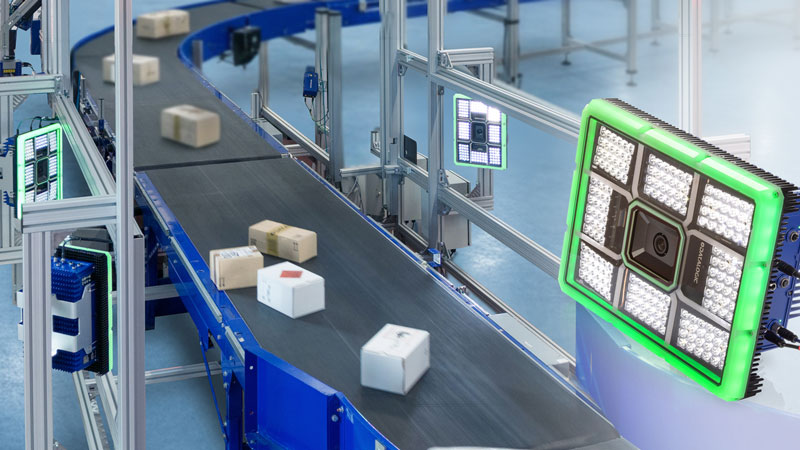
According to Datalogic, the purchase followed rigorous competitive benchmarking, performance comparison, and field validation under real operating conditions. After assessing alternative configurations, the customer confirmed the Matrix 830/930 as the most effective solution for its high-volume logistics environment — where throughput must remain constant and there is no room for error — qualifying the devices for large-scale deployment, with dozens of readers planned as part of a broader European program.
This deployment supports intake, where parcels are unloaded from trucks and conveyed into the hub for real-time identification and processing. This particular use case required the ability to handle heterogeneous items in shape, size, and material, increasing complexity in high-speed conveyor environments. Datalogic cited performance advantages and system simplification as the deciding factors behind the purchase.
Powered by a 28-megapixel ultra-high-resolution sensor, the new Matrix delivers powerful decoding performance, even on reflective plastic packaging and inconsistently positioned parcels. Its advanced imaging capabilities enhance operational flexibility, reducing dependency on precise parcel positioning and ensuring uninterrupted material flow.
Until now, comparable coverage required multi-reader or multi-camera configurations. Matrix 830/930 is designed to deliver the same operational capability with a single reader. The pitch for customers: lower system cost, reduced hardware footprint, and significantly less architectural complexity. Less equipment, more operational control.
For Datalogic’s case study customer, the ability to scale across sites without adding friction was an additional requirement. It needed to sustain uptime and protect throughput. The new Matrix met those expectations head-on and proved ready for logistics operations pressure.
“The rapid adoption of Matrix 830/930 demonstrates that the market is actively seeking higher performance solutions that combine ease of installation and operation with reduced maintenance costs. Being selected by a major industry player so shortly after release validates the technology and reinforces Datalogic’s strategic focus on delivering scalable, reliable solutions for demanding logistics environments,” Fabio Chiocchetti, global logistics automation sales executive vice president, said.
Datalogic further claimed that as parcel volumes continue to accelerate across Europe, they’ve seen operators raising the bar and moving fast. Their experience has been that such companies are not looking for incremental upgrades. They are looking for solutions that deliver measurable impact from day one. With this early deployment, the new Matrix 830/930 has emboldened Datalogic to believe its newest product is built to go the distance — and built to lead under pressure.
More Upcoming Innovations To Be Presented at Modex
From mobile computers to conveyor system image readers to safety laser scanners, Datalogic will be presenting a full booth of upcoming products at Modex 2026. Seeking to meet the demands for increased volume in the logistics field, Datalogic is planning to present a full portfolio of technology innovations designed to improve throughput, enhance visibility, and ensure reliable performance across both manual and automated logistics workflows.
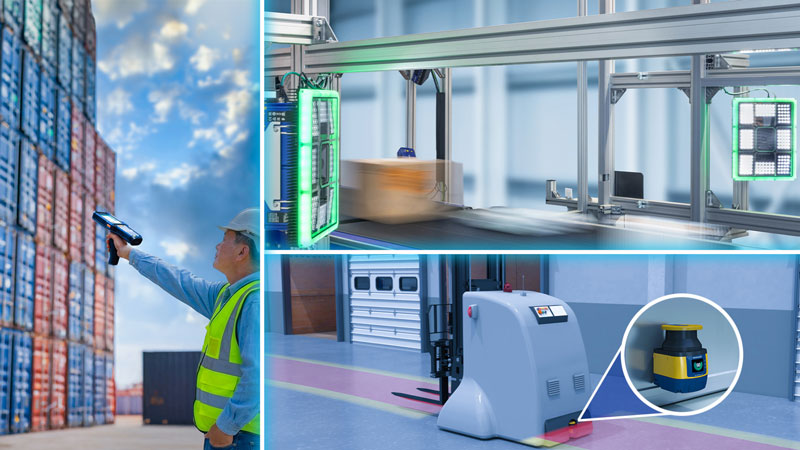
Chief among them will be the official global launch of Datalogic’s next-generation mobile computers for warehouse operators across the retail, manufacturing and transport and logistics sectors: the high-performance, ultra-rugged Falcon X60/X65 and Skorpio X40/X45.
Their new flagship, the Falcon X60/X65, is built on one of Datalogic’s most popular platforms, redesigned for the current market’s scan-intensive warehouse environments. Developed for demanding conditions and continuous operation, the Falcon combines long-range data capture performance, advanced wireless capabilities and high durability. The goal is quicker workflow execution, improved accuracy and uninterrupted productivity.
The Skorpio X40/X45, meanwhile, is designed to introduce a new level of agility to warehouse operations. Compact, ergonomic and optimized for high-frequency scanning, the device is built to help workers perform picking, verification and replenishment tasks with greater speed and comfort. Designed for all-day use, Skorpio reduces operator fatigue while ensuring consistent performance across shifts.
In addition, Datalogic is highlighting some of its newest technologies for high-speed parcel handling and conveyor-based logistics, including the aforementioned Matrix 830/930 image readers.
Engineered to maximize throughput, the Matrix 830/930 series is Datalogic’s big swing in large-area conveyor scanning. By seamlessly blending advanced imaging technology with streamlined deployment, the readers deliver reliable identification and high-quality image capture, even at high conveyor speeds. Using these readers, customers can expand parcel processing capacity, increase operational continuity and ease system integration across modern distribution centers and sorting hubs.
Last to be unveiled is the SLS 10m safety laser scanner, a partner project with Datasensing that pushes the limits of detection range. According to Datalogic, it is the first of its kind, the only safety laser scanner in the world capable of reaching a detection range of up to ten meters.
Datalogic’s hope is that this leap in detection coverage redefines operator safety and enables reliable automated operations across conveyors, robotic cells, palletizers, and autonomous guided vehicles (AGVs). By enhancing detection performance and minimizing operational interruptions, the SLS 10m is designed to establish a new level of safety and efficiency for the most demanding automated logistics environments.