Meeting Stricter Wind Standards: Extreme-Temp Safety Brakes and Smart Monitoring Take Center Stage
Updated regulations require higher performance; mayr showcases DIN EN 81-44 compliant elevator brakes and continuous drive-line holding solutions in Hamburg.
Published September 1, 2026

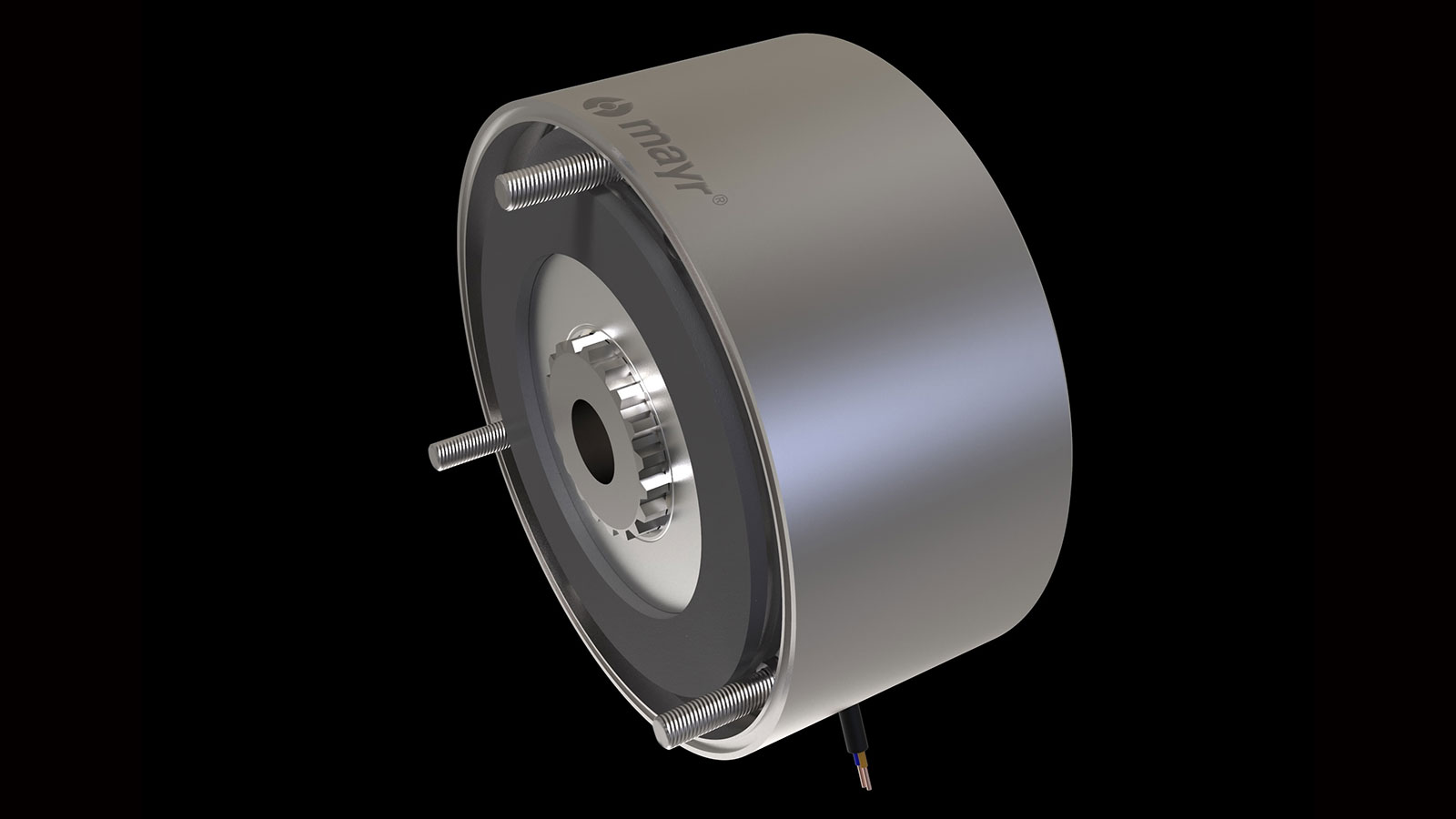
Engineered for pitch drives: the ROBA-stop M delivers reliable blade control in high-load environments.
As renewable energy generation expands, ensuring equipment safety and operating efficiency has become a critical priority for manufacturers facing stricter compliance requirements. At WindEnergy 2026 in Hamburg, mayr power transmission presents application-optimized safety brakes for pitch and yaw drives, including the ROBA-stop M pitch brake. In addition, solutions conforming to standards for service elevators and smart brake monitoring are on display.
The trend toward renewable energies continues at a rapid pace. To ensure safe and efficient energy generation, proven industrial technologies are being used with increasing frequency. For example, Servo motors are gradually becoming the standard in yaw drives as well, where they are largely replacing uncontrolled drives. This also presents the brake systems with new challenges. New regulations raise the bar even higher. A current example is the standard EN 81-44, which defines the safety requirements for the design and installation of power-driven elevators that are permanently installed in wind turbines. The regulation covers the safe transport of persons and goods as well as rescue and evacuation procedures. Safety brakes, as an integral part of the safety architecture, are particularly affected here. An important aspect of DIN EN 81-44: According to the standard, components must function reliably under the environmental conditions of a wind turbine, specifically at temperatures down to -25°C. However, many manufacturers only rate their brakes down to -20°C and therefore fall outside the standard. The temperature range of mayr brakes, by contrast, extends down to -40°C; for corresponding tests, mayr operates its own climate chamber.
Global Manufacturing Quality
Headquartered in Mauerstetten, Germany, mayr operates global production facilities in India, China, and Poland. Manufacturing at plants in Halol (India) and Zhangjiagang (China) results in local value creation, cost-efficient manufacturing, fast service worldwide and short routes to the local market. Identical test stands across all facilities ensure consistent quality standards globally.
Perfect variety – The right solution for every application
In general, mayr offers a wide range of braking solutions for servo motors in the pitch segment. In addition to the ROBA-stop M pitch brake, mayr power transmission offers further braking solutions in the ROBA servostop series, which can be installed on the A-side or B-side of the motor and are designed for temperatures up to 120°C. They have an impressive low mass inertia. For A-side flanged designs, the company offers solutions such as the ROBA alphastop brakes. Please observe that the motor then has to have an extended shaft, or the brake system has to be designed with an integrated shaft. One important characteristic of these solutions is: When the motor is removed, for example for maintenance work, the safety brake is also missing. Then safety measures are necessary to avoid any unwanted movements of the rotor blades or nacelle. The solution: Safety brakes, such as the ROBA topstop, which remain on the system even when the motor is removed and reliably hold the drive line in the de-energized state. Modular systems are available with custom-fit mounting flanges, and can thus be integrated flexibly into existing drives. In addition to the pitch segment, users can also rely on mayr safety brakes specifically developed and tested for yaw drives.
Sensorless monitoring – data for intelligent safety
With the ROBA brake-checker, mayr offers a module that monitors the safety brakes without the need for additional sensors. The module monitors the movement of the armature disk and outputs the determined switching condition via a control terminal, the signal output. The signal offers users a clear added value: The function monitoring enables an early and robust warning before the condition "brake no longer engages". This facilitates planned maintenance and enables the user to specifically investigate critical boundary conditions such as supply voltage that is too low, incorrectly dimensioned supply lines, elevated coil temperature and an enlarged air gap. The ROBA brake-checker complements conventional wear monitoring in terms of condition-based maintenance It provides highly meaningful data on the switching function and enables a targeted search for error causes such as increased wear, rising coil temperature, decreasing supply voltage or voltage drop on the feed lines of the brake. The safety and reliability of brakes increase, while maintenance planning can be optimized at the same time. Via the additional ROBA gateway module, the solution can be made network-capable, for example to integrate the acquired data into existing remote maintenance systems or to build digital twins.
mayr power transmission at WindEnergy 2026 in Hamburg: Hall B5, Booth 425.