Rethinking the Warehouse Cube: How Four-Way Shuttles Balance Density and Throughput
As industrial real estate costs climb and horizontal expansion stalls, modular pallet-handling systems offer a scalable alternative to rigid, high-volume automation.
Published November 12, 2026

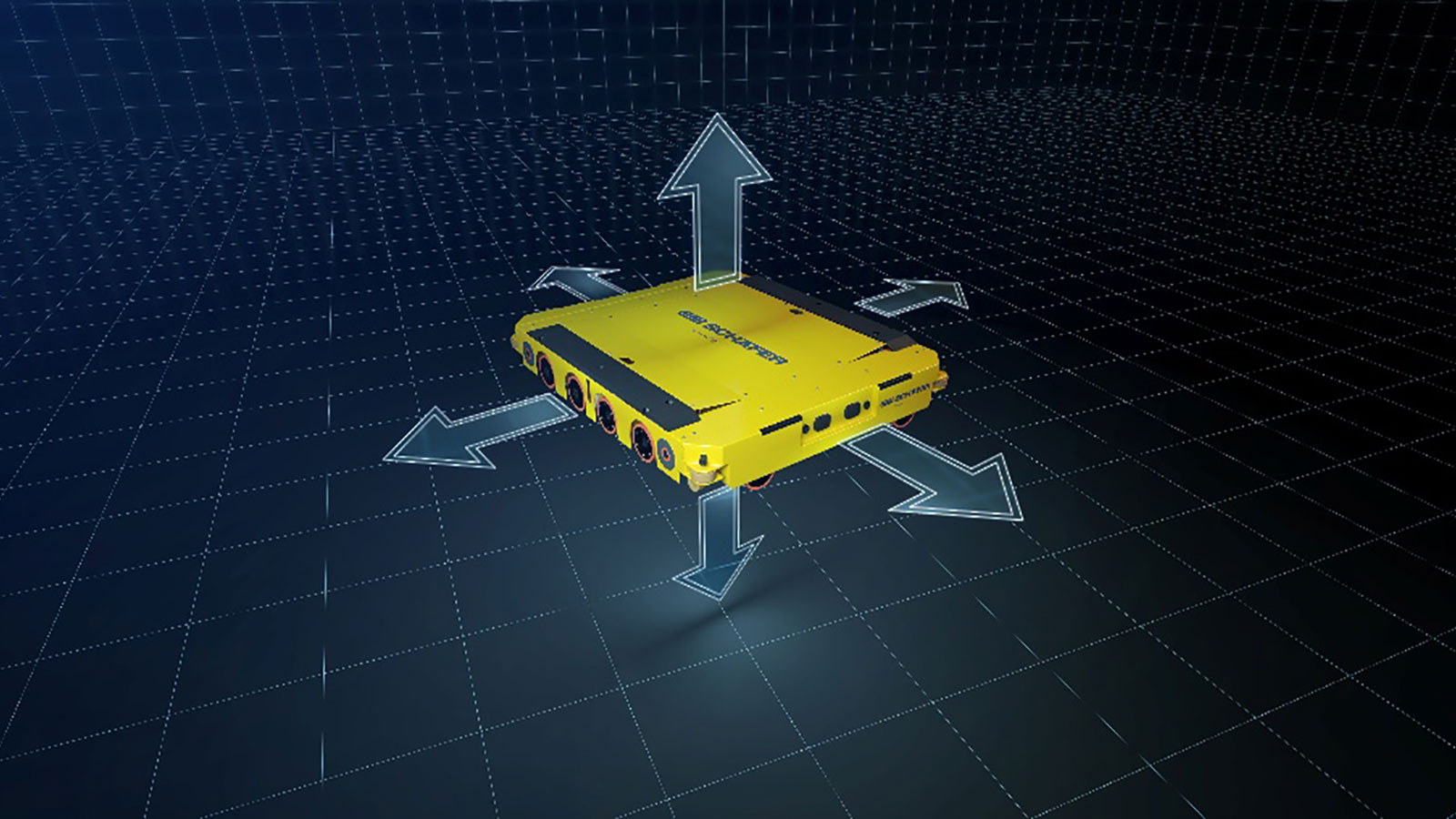
Equipped with onboard multi-sensor navigation and RFID positioning, the SSI Pallet Roaming Shuttle handles payloads up to 6,600 lbs (3,000 kg) across multi-deep, high-density storage racks.
For warehouse operators across North America—and in densely populated logistics hubs like South Korea—facility design is increasingly shaped by competing demands: making better use of expensive square footage, managing persistent labor constraints, and maintaining reliable operations without committing to automation that exceeds actual business needs.
The challenge is not simply to store more pallets, but to determine how storage capacity can be configured around the inventory characteristics and the movement the operation actually requires. As industrial real estate prices rise and building expansion becomes restricted in major US distribution corridors, facility planners are looking toward high-density markets like South Korea for proven design strategies.
Rethinking the use of warehouse space
Warehouse capacity is often assessed by the number of pallet positions available. However, the same building footprint can support different storage configurations, each with its own implications for accessibility, material flow and operating requirements.
Four-way pallet roaming shuttles, such as the SSI Pallet Roaming Shuttle, use onboard multi-sensor navigation to determine their position, monitor their surroundings in real time, and accurately detect obstacles. This enables flexible pallet handling across multiple storage levels, opening up greater possibilities for high-density, single- or multi-deep pallet storage configurations.
For facilities where building expansion is restricted, the ability to use available space more effectively can be an important design consideration. With system heights reaching 24 meters (approx. 78 feet) and options up to 40 meters (131 feet) subject to configuration, solutions like the shuttle allow warehouse planners to evaluate storage designs that make greater use of the space.
Matching movement capability to operational needs
The significance of four-way movement lies in the flexibility it introduces into storage design. This can be particularly relevant to manufacturing operations storing raw materials or finished goods, food and beverage distribution, and temperature-controlled warehouses where storage conditions and space utilization are crucial design considerations.
The shuttle supports payloads of up to 3,000 kg (approx. 6,600 lbs) and uses RFID and photoelectric positioning, with a specified positioning accuracy of ±5 mm (±0.2 inches). Operating at a maximum aisle-wise speed of 1.5 m/s (approx. 5 ft/s) when loaded and 1.6 m/s (5.2 ft/s) when unloaded, it provides a clear technical baseline for evaluating suitability against a facility’s specific storage and movement requirements.
Automation solving the right challenges, at the right time
For South Korean warehouse operators facing a rapidly aging population and labor constraints, the question is whether automating pallet storage and movement will address a meaningful operational need. Suited to medium-to-low SKU ranges and lower-throughput applications, the SSI Pallet Roaming Shuttle is worth considering where frequent retrievals and reduced reliance on repetitive manual handling are priorities, rather than high-volume pallet retrieval.
"The value of warehouse automation lies in how well a system fits the operation it is designed to serve. More automation does not automatically mean a better warehouse.
The real measure of an effective solution is how well its storage density, retrieval capability and throughput match the operation's needs. Investing in capacity or performance that the business cannot fully utilize—or sacrificing retrieval flexibility for density—misses the point of warehouse automation," said Jeon Jae Beom, Head of Sales, SSI Schaefer Korea.