Safe Torque Off Is Being Embraced Industry-Wide
After years of advances, it is being recognized as a new standard in servo drive safety.
Published March 17, 2026


Safe Torque Off (STO) is one of the most important safety measures incorporated when operators and machinery work in close proximity.
Whenever technology advances, there is always a flurry of competition to see which company or idea will become the new status quo. Apple vs. Microsoft going head-to-head on becoming the computer manufacturer of their time. DVD vs. Laserdisc on who will replace VHS. Or the current horse race surrounding which AI companies might become household names and which will bankrupt themselves.
These tend to be long games that take years to play out, but the dust always settles eventually, at least until the next big technological push. For servo drive technology, the dust has settled. The industry has crowned a decisive winner for their safety feature of choice: Safe Torque Off. You’ve probably heard of it. After all, it’s been around for a decade.
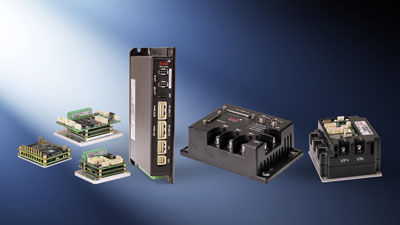
Safe Torque Off (STO) has a “back to basics” kind of pitch. Previous safety tools have traditionally been built and housed separately and relied on the ability to communicate digitally with the servo drive. STO is installed directly inside the drive, and when it needs to perform a safety stop, it doesn’t tell the motor to turn off. It physically stops the flow of electricity so it doesn’t have a choice.
STO itself might not be new, but its reputation is. After several years of growing momentum, STO is considered the “standard” by pretty much any expert you ask.
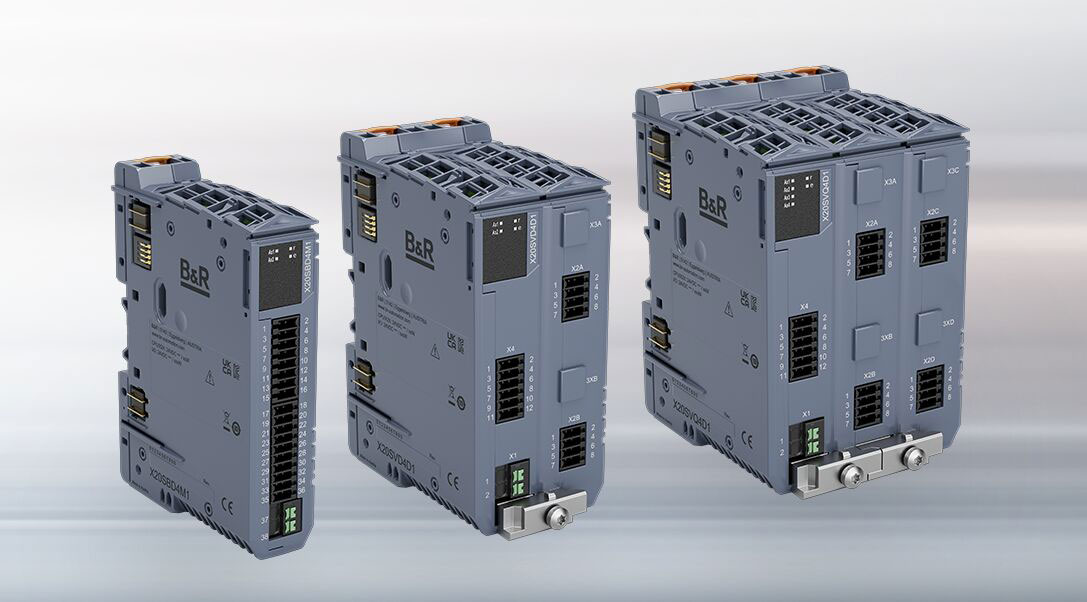
“STO is now considered a standard safety baseline in servo applications,” Wilfried Guerry, product manager of motion technologies at B&R Industrial Automation, said. “While alternative safety solutions can achieve similar results, the integration of STO directly into the servo drive has made it both technically and economically attractive.”
Guerry is far from alone. Back in 2025, Advanced Motion Controls talked about STO in nigh-identical terms. MRO Electric called it “critical,” “integral,” and any number of other glowing phrases. Industry opinion has become almost unanimous: When you need to improve safety or meet IEC standards in your automated industrial applications, you start with STO.
“Human safety is critical in industrial environments,” Guerry said. “When machine doors are open or operators are performing maintenance, the machine builder must ensure that motion cannot start unexpectedly. STO prevents this by guaranteeing that the drive cannot energize the motor, even if someone presses the start button.”
Universal Improvement
According to experts like Guerry across the industry, STO has reached the point where it improves upon external solutions in almost every way.
The safety benefits are obvious. While everything else is getting increasingly digitized, STO is a return to the world of the physical. Programs encounter bugs and networks can fail. Human error can override a command and accidentally cause an incident. Physically stopping the flow of electricity is a pretty definite solution, and doing it with fewer tools reduces the number of potential points of failure.
But other benefits abound. By using a tool installed directly into the drive, companies can save on space and time. Having fewer components means less maintenance, less custom wiring, and fewer safety tests. And all of that means saving money.
Part of this shift also just comes down to how STO has naturally developed and aged over its lifespan. As is the way with a lot of technology, the longer it’s around, the more affordable it usually becomes. STO has been around long enough and iterated on enough that it can compete on affordability on top of its other benefits.
Where We Go From Here
The dust has settled for STO, but there is always more work to be done. If STO has cemented itself as the new bedrock for industrial safety, then we have already started building the next layer of tools founded on it.
“STO is the foundation,” Guerry said. “But it is only one part of a broader family of safety functions. STO alone simply removes torque, which may be enough for many applications, but it does not control how the motor stops.”
In addition, there is also still the risk of a lingering charge in the drive, which does carry the possibility of electrical shock if someone interacts with the drive while STO is active. STO is a significant step up in safety, but it is not 100% foolproof.
With STO as the basic framework, manufacturers have developed a number of other supporting solutions on top. Functions like Safe Stop 1 (SS1) and 2 (SS2) allow you to more finely control how the motor stops once it loses charge. An operator might want a more controlled stop for any number of reasons, from protecting technicians to any products the motor is interacting with (such as on a conveyor belt) to the motor itself.
You can add all kinds of additional features beyond that, from managing a motor’s speed and torque to including extra, redundant brakes in case of failure. The list of options is ever-growing, and many modern servo drives will come with their own unique cocktail of value-added features.
“STO must be integrated into a complete safety concept,” Guerry said. “A certified STO input alone is not sufficient, it must be triggered by a certified safety device. In wired architectures, this typically means safety-rated I/O modules or safety relays. In network-based safety systems, STO can be triggered via a certified safety PLC using a safe communication protocol.”
What you ultimately need to make your industrial application safe and up to standard is a conversation between you and your servo drive provider. The best solution for you will heavily depend on your own specific requirements, from productivity to price to the technical specs of your system. But no matter what you pick, it will probably include STO.
For More Info:
B&R Industrial Automation
11415 Old Roswell Rd
Suite 100
30009 Alpharetta
United States
(770) 772-0400
office.br@us.abb.com