Teaching Robots to Work in Plain English
Vention's Agentic AI Debuted at IMTS 2026
Published September 23, 2026

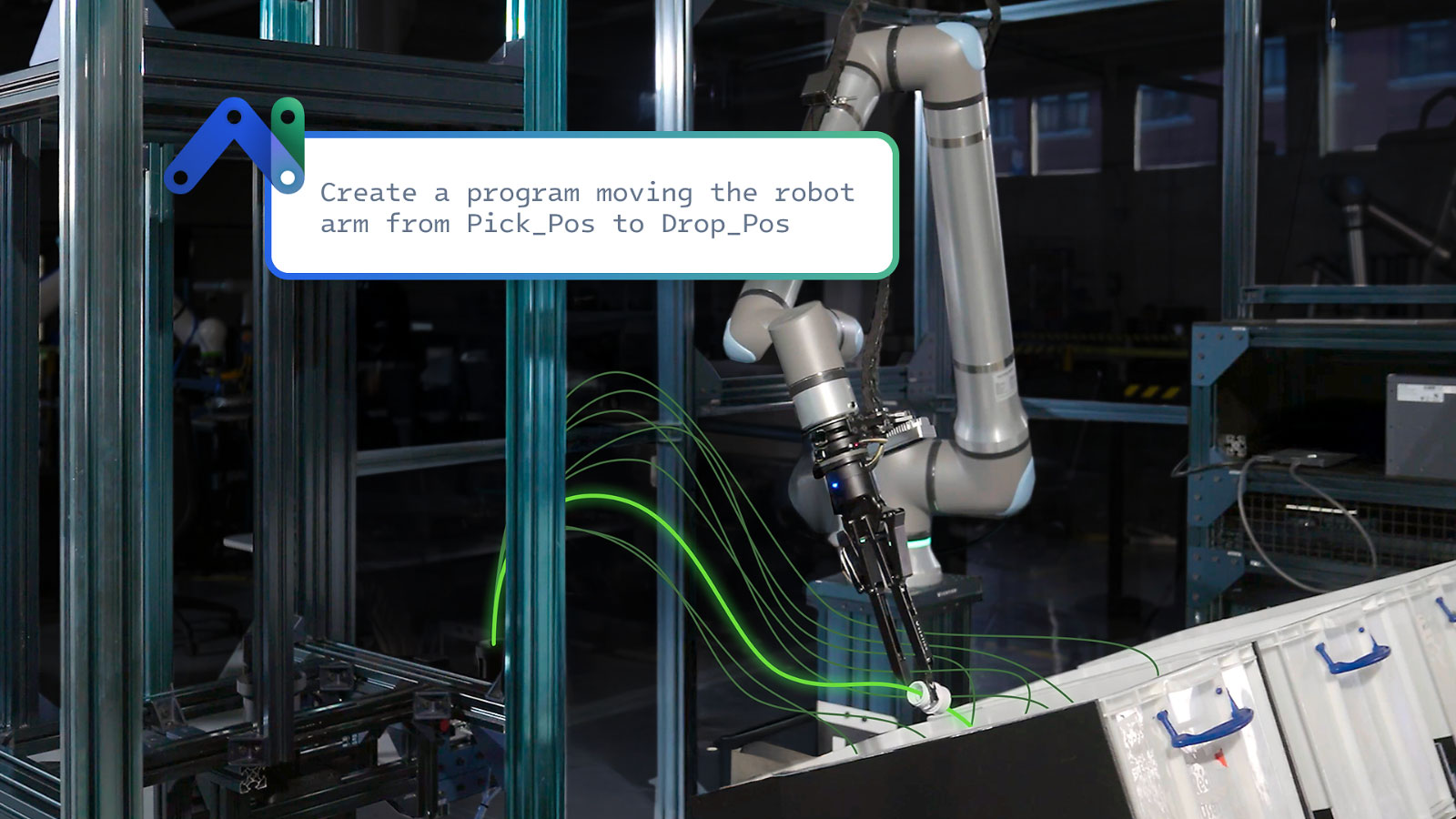
At IMTS 2026, Vention displayed both physical AI and agentic AI in action.
Industrial automation has long demanded specialized expertise. Designing a robotic cell, programming its movements and validating that everything works together can require knowledge of robotics, controls and programming languages.
Vention is betting that it doesn't have to be that way.
“It's an all-in-one industrial automation platform,” says Brendan Sterne, Chief Product Officer at Vention. The company’s browser-based platform allows users to design an automation cell, program it, simulate the system using a digital twin, generate a bill of materials and ultimately order the equipment.
The company’s latest push takes that concept a step further with MachineAgent, an AI-powered approach that allows users to program machines using natural language.
During a demonstration, Sterne described a simple robotic application: a conveyor moves a piece of candy to a designated pick point, a robot picks it up and then places it on a slide. Traditionally, programming that sequence would require specialized robot-control commands. With Vention’s AI copilot, the user can simply describe the desired actions.
“Move the conveyor to the pick point,” Sterne demonstrated. Then: “Pick the candy with the robot.” Finally: “Drop the candy on the slide.”
The AI examines the digital representation of the machine and generates the underlying robot program. In the demonstration, it produced roughly 25 lines of code—without requiring the user to write those commands manually.
Test it before the robot moves
The key to Vention's approach is the digital twin. Rather than sending AI-generated instructions directly to a physical robot, users can run the program in a simulated environment first.
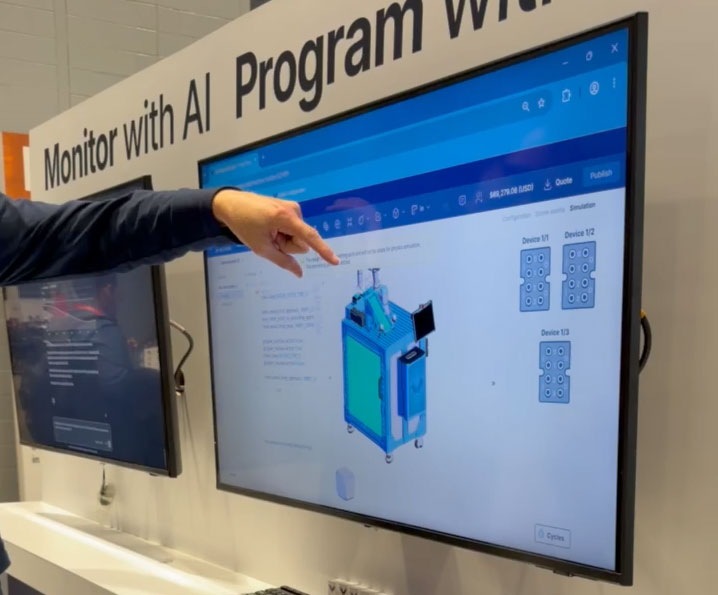
That provides an important layer of validation. If a generated robot motion is awkward or sends the robot into an obstacle, the problem can be identified in the digital environment before anything happens on the factory floor.
“You don't have to understand Python,” Sterne explains. “What you need to do is run it and look carefully and say, is this the motion that I want?”
And if the motion isn't right, the user can simply tell the AI what to change. In Sterne's demonstration, a robot movement was modified by asking the system to change the order of operations and add another action. The program could then be regenerated and tested again.
The result is a different kind of programming workflow: describe, simulate, refine and deploy.
AI writes the program—but doesn't run the robot
That distinction is particularly important to Sterne.
As concerns grow about AI systems being given direct control over physical machines, Vention's architecture deliberately separates AI-generated programming from real-time robot control.
“We are not doing that,” Sterne says of putting an AI system directly in control of a robot. Instead, the AI writes a program; once the program is generated and validated, the AI is no longer making decisions about the robot's movements. The physical machine executes the deterministic program.
Vention does use AI within its robotic systems for vision and perception, but Sterne describes that capability as constrained rather than a general-purpose “brain” controlling the machine.
That distinction reflects a broader philosophy: AI can make automation easier to create without necessarily putting an autonomous AI decision-maker in charge of the equipment.
From programming to troubleshooting
Sterne sees another major opportunity for AI beyond writing robot programs.
Vention is also developing agents that can analyze machine data, performance metrics and logs. Instead of navigating multiple dashboards to determine how a fleet of machines is performing, an operator could ask an agent a straightforward question about the health of the system.
The agent could identify an underperforming machine, examine its logs and look for correlations that might explain the problem. Sterne describes an example in which an intermittent network issue was identified by analyzing communications between a robot and the network. Replacing the network cable resolved the problem.
For industrial facilities, that could shift AI's role from simply creating automation to helping maintain it.
The next frontier: designing the machine itself
Programming may be one of the first mature applications for AI in industrial automation, but Sterne believes the technology will eventually move further upstream.
Today, Vention can use AI to program increasingly sophisticated machinery. Sterne says Vention employees are already using AI extensively for programming, while customers are beginning to adopt the tools as well.
The bigger challenge is having AI design the physical automation system itself.
That problem is considerably harder because it involves determining how individual components should be assembled into a complete machine. Sterne expects AI-assisted machine design to become possible as advances in AI for computer-aided design continue, but says the technology isn't ready to reliably solve the problem today.
His estimate? Potentially within a year.
For now, Vention's vision is more immediate: make sophisticated automation accessible to people who may not be traditional robotics programmers. The machine still follows a deterministic program—but increasingly, the person creating that program can simply describe what they want in plain English.
And that may prove to be one of the most consequential changes AI brings to the factory floor: not replacing the person who builds the automation, but dramatically lowering the technical barrier to doing it.
"AI is changing what manufacturers should expect from automation," said Etienne Lacroix, founder and CEO of Vention, in a pre-show press release. "Physical AI gives machines the ability to understand and adapt to the factory floor. Agentic AI brings that same intelligence to the people designing, programming, and operating automation."