What do YOU Like Most About Working in Automation?
Our Sources Say the Industry is Rewarding, Growing Fast and Just Plain Cool
Published July 15, 2026

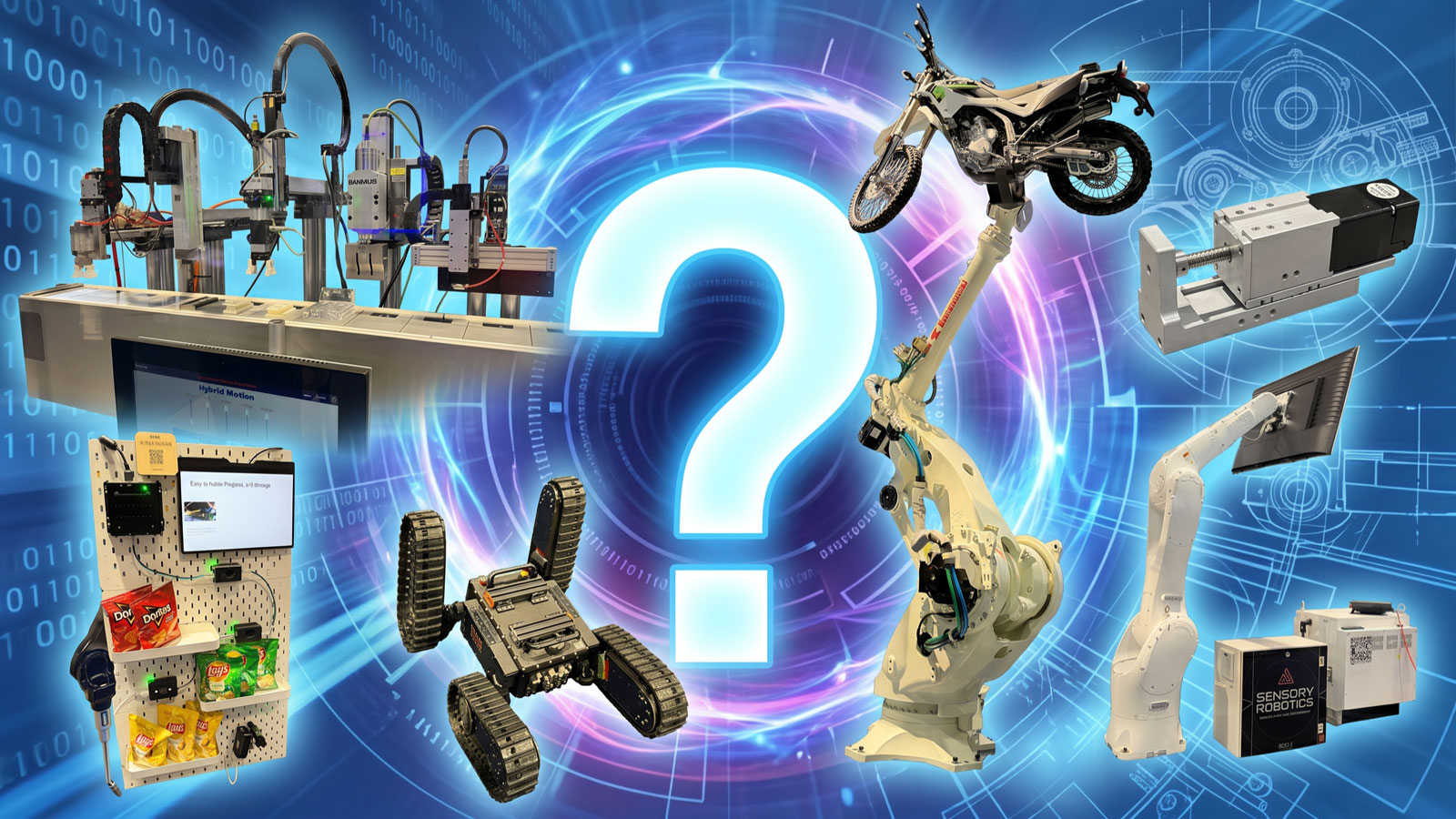
What do YOU like about working in automation? Shown here are a variety of products that were featured at Automate 2026.
It’s an exciting time to be involved in automation. As we learned at Automate 2026, the technology is changing faster than ever, especially in the fields of robotics and AI. But it’s not just cutting-edge science-fiction becoming reality. It’s also the explosion of applications and the expansion of automation beyond the places it’s been traditionally found.
I’ve heard it said that the world will never be less automated than it is today. And that’s a truth that’s hard to miss when you’re immersed in the mutual enthusiasm of 50,000 people all focused on changing the world. There was an energy in the building. An excitement about being part of this transformation.
Some of this is not new, of course. There have always been people who have enjoyed building things, making them work more efficiently and creating value through technology. These are the inventors, system integrators, PLC programmers and machine builders who have been automating industry for decades.
At Automate 2026, we spoke with a lot of people who are invested in automation, and we asked them one simple question: What do YOU like most about working in automation today?
Opportunities Abound
Not surprisingly, one of the most oft-cited reasons for enthusiasm about this industry is the sheer amount of rapid growth and opportunity available.
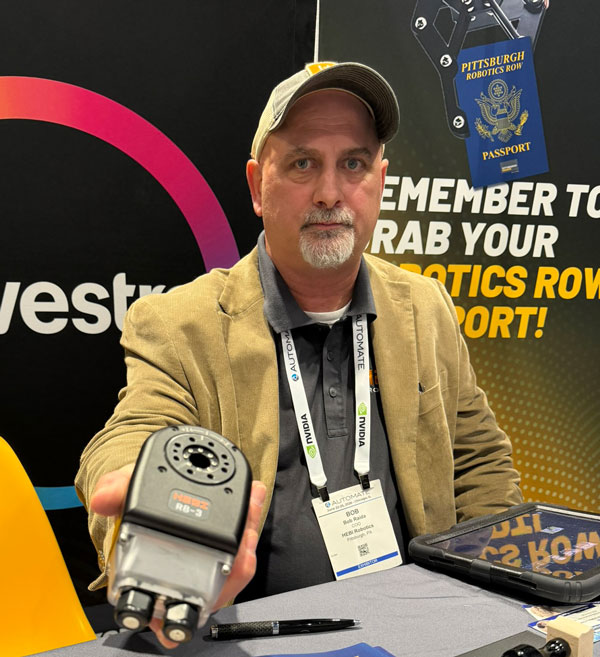
“I think it's exciting that people are finally starting to see the real value in automation, and not just traditional manufacturing automation, but out in the field, in space, underwater, all over the place,” said Bob Raida, CEO of HEBI Robotics. “There's just no limit to what can be done, and we're here to make it happen.”
HEBI Robotics is a Pittsburgh-based spin-off of Carnegie Mellon University. Founded in 2014, HEBI was launched to commercialize and continue the development of a technology platform that makes it possible to quickly create capable and robust custom robotic systems.
“There are limitless possibilities,” Raida said, “and that's something that I find really exciting because that's our approach. Our whole premise as a company is that the world need needs many types of robots, many types of automation systems.”
Mike Peek, Marketing Manager at Güdel, has only been involved in the automation industry for about four years. Güdel manufactures heavy-duty linear motion systems, including linear tracks for robots and gantry systems.
“What drew me was the growth of automation,” Peek said. “My very first week, I walked into a plant that had a line where at the beginning you had parts on a pallet, and at the end you had shrink-wrapped pallets of finished product, and in between only three human hands touched it. For somebody who’s not in the automation industry, that’s a game changer. That blew my mind. And I knew right then that this was the right industry. The people who join it are going to win because they’ll be there at the forefront of that innovation.”
Lots of others also weighed in on the pace of change and the explosion of potential applications.
“I think there's lots of opportunity.” said Adela Wee, Chief Innovation Officer and Co-Founder of Hellbender, “That's probably the most interesting thing for us.”
Hellbender specializes in building industrial grade, edge-based physical AI solutions, including off-the-shelf vision systems designed to make high-quality, affordable imaging available to development teams. Wee says that having development-ready solutions that can be implemented quickly and easily is critical to allow for the expansion of automation into new applications.
Mark Gagas, COO of Sensory Robotics, said “Things are happening so fast now. Forget AI for a second. I mean, that's all great stuff, right? But just the pace of innovation is just so exciting.”
Sensory Robotics’ SR-1 is a robotic safety system that’s designed to allow humans and robots to work in close proximity without the need for fences, light curtains or other barriers.
Gagas went on to mention the number of recognizable companies that are just now getting involved with automation. “I think it's great to work with these global companies that everybody knows about, and helping them improve the safety in their manufacturing process is kind of cool for a company like ours. So we're just really thrilled to be part of that. Really awesome.”
Making Stuff is Cool
Many of our interviewees also pointed out that in today’s world, automation is how things are made, and for many of them, seeing, understanding and creating the ways things are made is an important part of what makes automation so special for them.
“I grew up in the era of How It's Made,” said Chelsea Krause of Emerson. Krause is VP Sales North America for Factory automation, fluid and motion control. “What has always been interesting to me are the number of different technologies and innovations that come together to create products for human use and human consumption. I think that's really exciting because I think we're making the world a better place.”
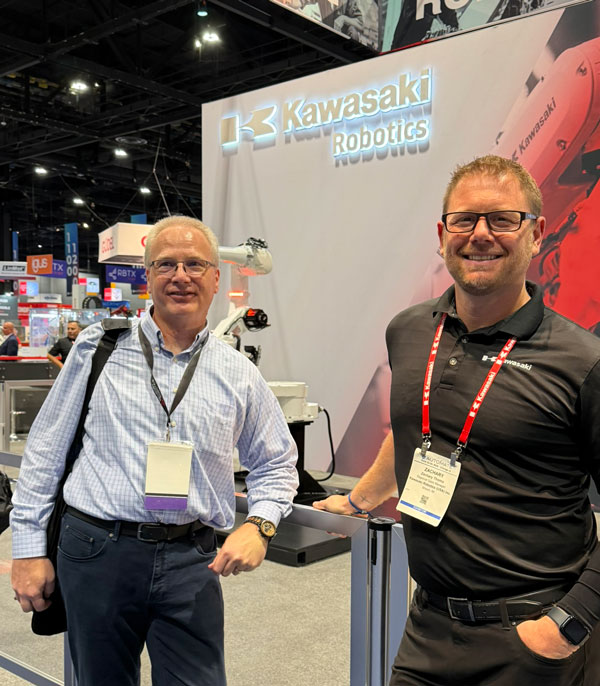
Zachary Thoma, Regional Sales Manager for Kawasaki Robotics, shared a similar attitude. “It's hard for me to not just go straight to my favorite part of the job, which for me is getting to see how all kinds of stuff is made,” Thoma said. “I have worked on three different continents and countless facilities in this country and others. I’ve had the opportunity to see how everyone makes things, from garbage disposals to microwaves to Saran wrap to bulldozers and tractors and circuit boards. For me that’s the biggest privilege of the job. Everything needs some automation. Almost almost everybody's in it, and they're trying to get into it if they're not yet.”
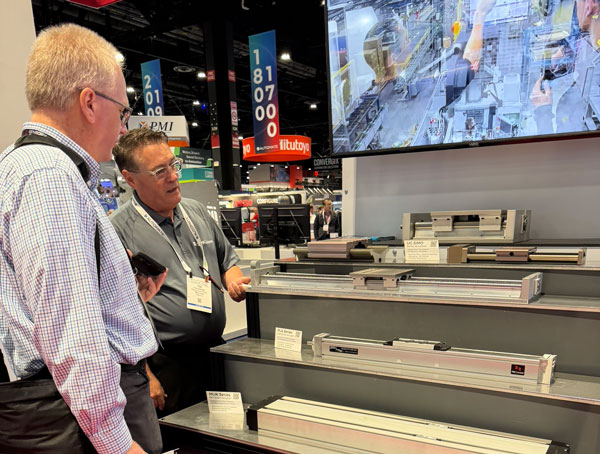
“What I love about it is just watching all the applications that people have for things, says Tom Ouellette, VP of Mechatronics for PBC Linear. “Everything from entertainment to automotive manufacturing, food production, agriculture, and mining. I mean, just everything.”
Solving Real Problems
Of course, many in the crowd are engineers, builders, tinkerers and problem solvers at heart. Although most of them think automation is cool, they’re also dedicated to solving real-world problems.
Ironically, Matthew Bush, CEO of Hirebotics says that working in automation helps make manufacturing more human. “I think for too many years we've treated humans like robots,” Bush said. You know, we expected a line to run at a set rate regardless of whether it was 8 a.m. or 5 p.m. But humans aren't like that. We need breaks. We have grocery lists that we're making in our head. We have family drama that we're dealing with. We get distracted. And so how do we put the humanity back in manufacturing?”
Hirebotics produces a line of custom designed robotic systems for tasks like welding and painting. “Let's get rid of the jobs that nobody wants to do anyways and let the robots do them,” Bush said.
Ara Surenian, Vice President of Product Management for Rockwell Automation, said, “What I love most, not just in automation but in general, is the problem solving side. Understanding there's a problem and finding the right solution for the problem: That to me is the most fun. So with automation and how accessible these really sophisticated pieces of equipment have become, you can really solve some complex problems now.”
“I love the practical nature of the work,” said David Griffin, Chief Sales Officer for Seegrid, which manufactures AI-powered autonomous mobile robots (AMRs) and autonomous fork trucks. “It is a super high tech yet super blue collar job. And I love it. I spend as much time on factory floors as I do with software engineers. And so I love the roll-up-your-sleeves, real-world aspect of actually getting the work done.”
“Industrial automation is a real opportunity to solve real-world problems to create a win for customers, said Patrick Mondi, CEO of Thoro AI. I would argue that any new grad who wants to work for a SaaS business, is doing the wrong thing. Come work in industrial automation. What's more rewarding and fulfilling?”
Whether you’re talking about physical AI, humanoid robots, or even just clever applications of mechanical technology and machine controls, here at AutomationMesh, we’re glad to be a part of such an enthusiastic community.